- ■
Isar Aerospace achieved Europe's first commercial orbital launch with its Spectrum rocket, according to The Verge
- ■
The shift from zero commercial orbital capability to operational launches breaks Europe's dependency on SpaceX and government programs
- ■
For satellite companies and space infrastructure investors, this opens competitive pricing and reduced geopolitical launch risk
- ■
Watch whether Isar can maintain launch cadence—commercial viability requires more than one successful flight
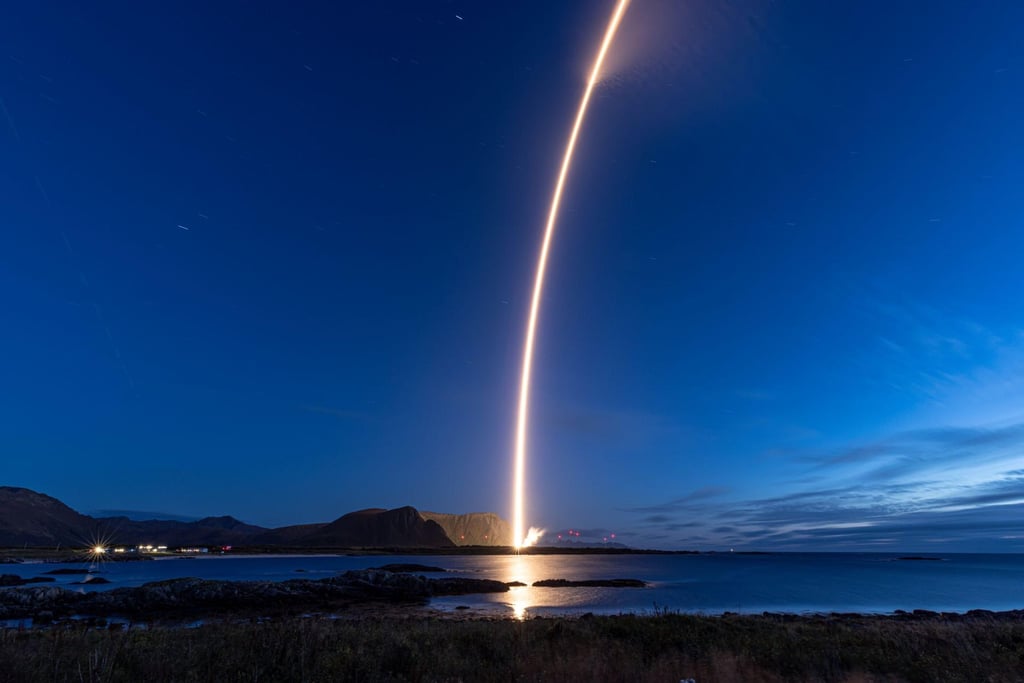
Isar Aerospace just put Europe on the commercial launch map. The German startup's Spectrum rocket reached orbit from Norway this morning, making it the continent's first entirely commercial orbital launch—a capability previously monopolized by government programs and US providers. After a 30-second explosion last March, the second attempt succeeded, breaking what CEO Daniel Metzler calls the industry's "largest bottleneck." For satellite operators and space infrastructure investors, the supply side of the equation just changed.
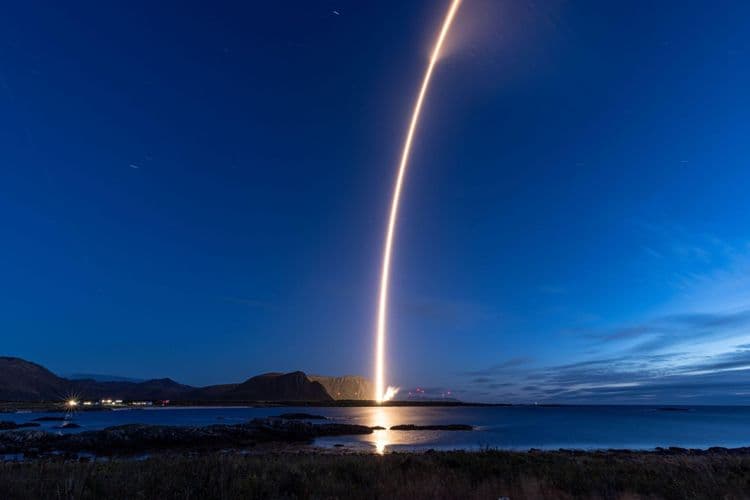
Isar Aerospace crossed into orbit this morning, and with it, Europe crossed a threshold it's been chasing for years. The two-stage Spectrum rocket lifted off from a Norwegian spaceport and deployed payloads to low Earth orbit—a feat that sounds routine until you realize no European commercial entity has done it before. Government programs like Arianespace have operated for decades, but commercial access? That door just opened.
The timing matters because launch capacity has become the constraint on space infrastructure growth. CEO Daniel Metzler told press that "launch continues to be the largest bottleneck for the global space industry." He's not wrong. SpaceX dominates Western commercial launches, creating both pricing power and geopolitical dependency for European satellite operators.
The numbers tell the infrastructure story. Europe generated roughly 230 satellite launches between 2019 and 2024, but nearly all rode on government-backed Ariane rockets or contracted through US providers. Commercial alternatives didn't exist. That's the monopoly Isar just broke—not through superior technology necessarily, but by achieving the baseline capability to compete.
This wasn't inevitable. Last March, Isar's first attempt exploded 30 seconds into flight, crashing into the sea in what looked like a catastrophic setback. Space launch has a brutal learning curve—failures kill momentum and investor confidence. But Isar iterated fast, diagnosing the failure and returning to flight in six months. That's the cadence commercial space requires.
The market responded immediately. European satellite operators now have options beyond Arianespace's institutional pricing or SpaceX's US export controls. For companies building Earth observation constellations or communications networks, launch slot availability determines deployment timelines. More providers means shorter queues and competitive pricing pressure.
But one successful launch doesn't make a commercial business. Rocket Lab took three years and multiple launches to prove commercial viability. SpaceX needed years of operational cadence before customers trusted it with billion-dollar payloads. Isar faces the same valley—demonstrating reliability across dozens of launches while managing costs.
The geopolitical angle matters too. Europe's space policy has prioritized sovereign launch capability for national security payloads, but commercial access extends that independence to private sector operations. When ITAR restrictions or political tensions complicate US launch contracts, European operators now have domestic options. That's infrastructure resilience, not just competition.
Investors evaluating space infrastructure should note the shift from monopoly to multi-provider dynamics. Launch pricing has remained stubbornly high despite SpaceX's reusability gains, partly because alternatives couldn't scale. Isar's entry, combined with other emerging providers, suggests pricing pressure ahead—good for satellite operators, challenging for launch margins.
The technical achievement is straightforward: a two-stage rocket reaching orbital velocity with payload deployment. What's not straightforward is building the manufacturing, supply chain, regulatory relationships, and operational cadence to do it repeatedly. Isar demonstrated the former. The latter takes years.
For satellite companies, the decision calculus just shifted. Booking launch slots now involves comparing Isar's pricing and availability against established providers—a comparison that didn't exist last week. Early adopters will likely secure favorable terms as Isar builds manifest. Risk-averse operators will wait for launch history to accumulate.
The next threshold to watch is launch cadence. Can Isar maintain quarterly launches? Monthly? Rocket Lab went from annual to monthly cadence over four years. SpaceX took longer but achieved weekly flights. Commercial viability lives in that operational rhythm, not one-off demonstrations.
Europe's launch bottleneck didn't disappear this morning, but it cracked open. That's the inflection point—from zero commercial options to competition, from dependency to alternatives, from theoretical capability to operational reality. What happens next depends on execution cadence and market adoption, not just technical achievement.
Isar Aerospace's orbital achievement shifts Europe from launch dependency to emerging competition, but one flight doesn't build commercial viability. Satellite operators gain negotiating leverage immediately, though risk-averse buyers will wait for operational cadence. Investors should monitor launch frequency over the next 12-18 months—that's where commercial reality separates from technical demonstration. For space infrastructure portfolios, this marks the start of European launch competition, not its conclusion. The bottleneck cracked, but capacity growth requires sustained execution.