- ■
Tesla launches Cybercab without steering wheel or pedals, forcing regulatory approval for vehicles lacking human controls
- ■
Business model pivots from $50K+ car sales to transportation-as-a-service, competing directly with Waymo's established robotaxi operations
- ■
Vision-only autonomy approach faces regulatory test: Can cameras alone meet safety thresholds competitors achieved with lidar?
- ■
For investors: This clarifies whether Tesla values as auto manufacturer or tech platform—liability framework determines margin profile
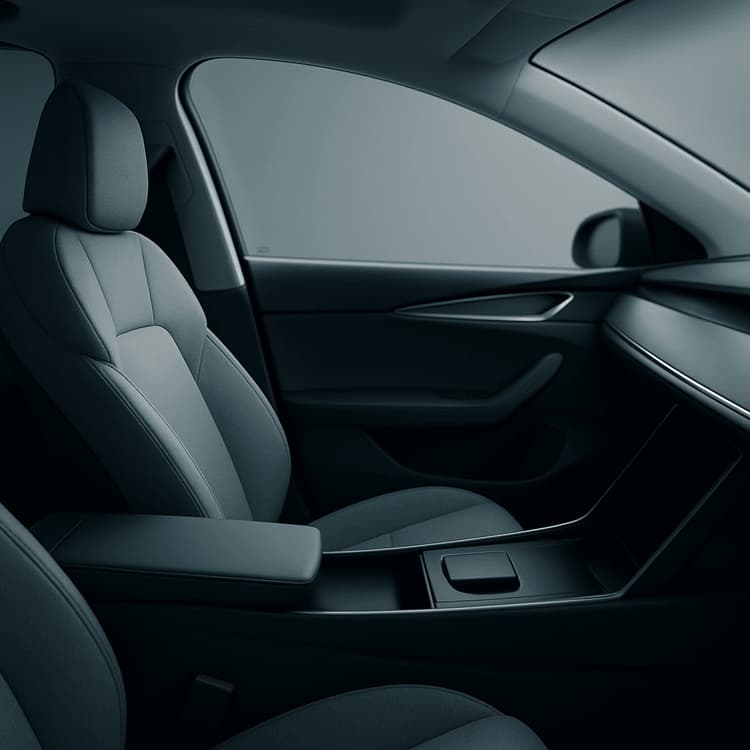
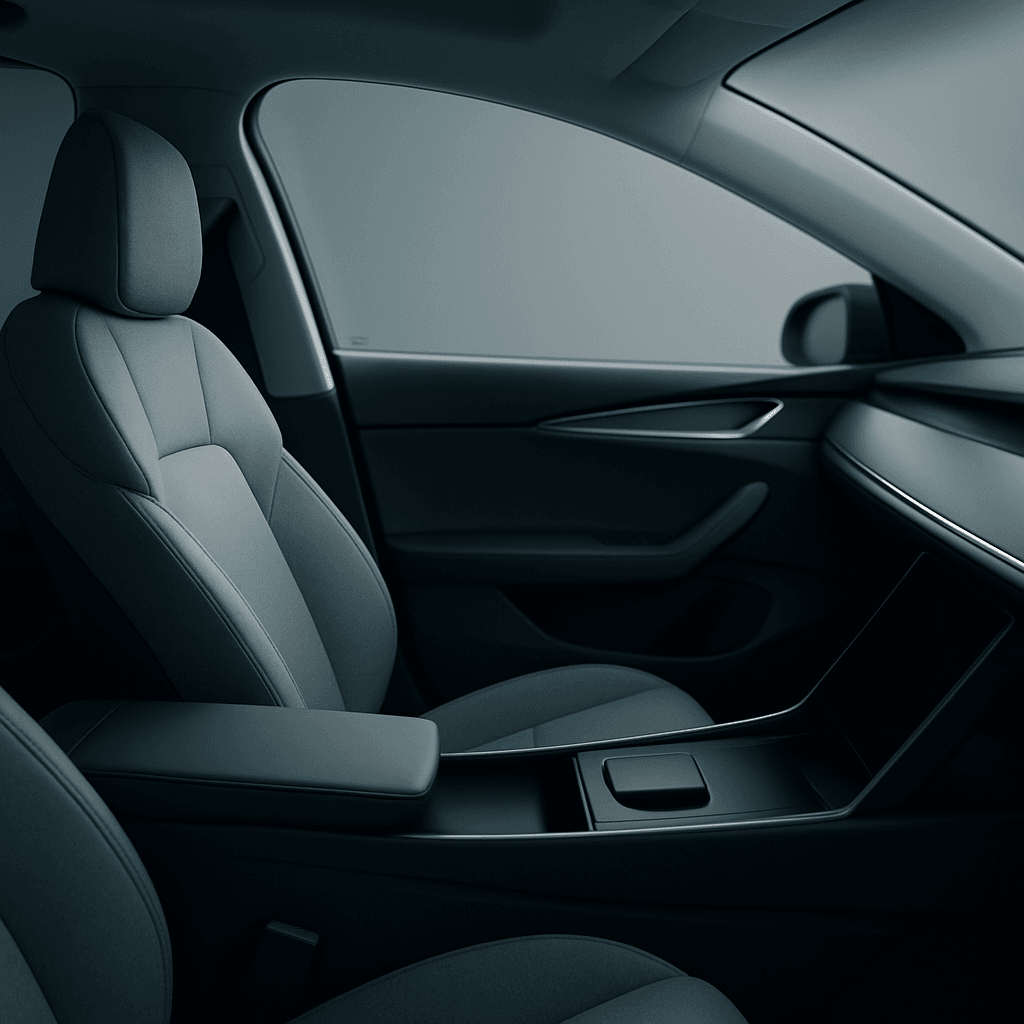
Tesla is about to launch the Cybercab, a gold two-seater with no steering wheel or pedals, according to TechCrunch reporting. This isn't another Full Self-Driving update. It's the moment Tesla crosses from car manufacturer selling driver-assist systems to transportation operator running autonomous fleets. The missing controls force a regulatory decision that defines whether vision-only autonomy suffices for driverless operation, a threshold Waymo and Cruise spent years navigating with lidar-heavy approaches. The timing matters because it tests whether Tesla's manufacturing scale can leapfrog established players, or whether regulatory bottlenecks expose the gap between assisted driving and true autonomy.
Tesla's Cybercab launch represents the company's starkest strategic fork since the Model 3 scaled production. The vehicle arriving without steering wheel or pedals isn't a design choice—it's a regulatory forcing function that separates driver-assist systems from autonomous transportation.
The numbers tell different stories. Waymo operates roughly 700 autonomous vehicles across four cities, completing over 150,000 paid rides weekly after spending 15 years building regulatory relationships and lidar-based systems. Tesla's Full Self-Driving software runs on millions of customer vehicles, generating massive training data, but every one of those cars requires a licensed driver ready to intervene. The Cybercab eliminates that safety net entirely.
This matters because the regulatory framework for vehicles without human controls remains fragmented. The National Highway Traffic Safety Administration grants exemptions for up to 2,500 vehicles annually that don't meet Federal Motor Vehicle Safety Standards designed around human drivers. Cruise received exemptions for its Origin robotaxi. Waymo operates under similar frameworks in California and Arizona. Tesla now needs the same approvals, but with a critical difference: vision-only autonomy instead of lidar-radar sensor fusion.
The technical bet runs deeper than hardware. Waymo's approach maps environments in high definition, creating detailed 3D representations of operating areas. Tesla's vision system, refined across its consumer fleet, relies on neural networks interpreting camera feeds in real-time, similar to human vision. Regulators must now decide if that approach meets safety thresholds for vehicles where passengers can't grab a wheel.
The business model shift carries equal weight. Tesla's automotive gross margins hover around 18%, selling vehicles for $40,000 to $100,000. Transportation-as-a-service operates on different economics. Uber takes 25-30% of each ride, with drivers capturing the rest. A robotaxi fleet eliminates driver costs but adds operational complexity: vehicle maintenance, cleaning, charging infrastructure, customer support, insurance at scale.
Waymo's experience proves instructive. The company operates ride-hailing services in Phoenix, San Francisco, Los Angeles, and Austin, but scaling remains expensive. Each vehicle costs substantially more than consumer cars due to sensor arrays. Tesla's manufacturing advantage could flip this equation if regulatory approval comes through—the company can build vehicles at automotive scale with lower per-unit costs.
But the liability framework creates the real inflection point. When a Tesla with Full Self-Driving hits something, a human driver holds legal responsibility. When a Cybercab without controls causes an accident, Tesla becomes the operator, not just the manufacturer. This mirrors the transition aviation faced moving from pilot-operated to automated systems, where liability shifted to aircraft manufacturers and operators for autonomous functions.
The timing puts pressure on established players. Cruise suspended operations in 2023 after a pedestrian dragging incident in San Francisco, revealing how quickly regulatory permission evaporates when safety questions emerge. Waymo expanded cautiously, building trust through millions of autonomous miles without major incidents. Tesla's approach—announcing a vehicle without controls before securing broad regulatory approval—inverts this playbook.
For enterprises watching this transition, the operational infrastructure matters as much as the technology. Waymo operates depots where vehicles return for charging, cleaning, and maintenance. The company employs remote assistance operators who can guide vehicles through unusual situations. Tesla must build equivalent infrastructure or prove its systems need less support.
The geographic approval process adds another dimension. California's Department of Motor Vehicles issues separate permits for testing with safety drivers, testing without drivers, and commercial deployment. Texas and Arizona offer more permissive frameworks. Tesla will likely pursue a patchwork strategy, launching where regulations allow while building the safety case for broader approval.
This creates a window for competitors to define standards. If Waymo's sensor-heavy approach becomes the regulatory baseline, Tesla faces expensive retrofits. If regulators accept vision-only systems meeting equivalent safety thresholds, Tesla's manufacturing scale becomes decisive.
The market's watching which framework wins. Autonomous vehicle investment reached $20 billion between 2020 and 2023, according to industry tracking, but funding contracted as timelines extended. Tesla's entry with manufacturing scale could accelerate commercialization or expose technical gaps that slow the entire sector.
What matters now is whether Tesla's bet on vision-only autonomy and manufacturing scale can compress the timeline Waymo needed to build regulatory trust. The Cybercab forces that answer within months, not years. Regulators must decide if camera-based systems meet safety thresholds for vehicles without human controls. If yes, Tesla's production capacity creates a different competitive landscape. If no, the company faces expensive technical pivots or prolonged geographic limitations.
The fork isn't just Tesla's—it's the industry's moment to define whether autonomous transportation scales through cautious validation or aggressive deployment. The vehicles without steering wheels make that choice explicit.
Tesla's Cybercab launch transforms autonomous vehicle economics from a technology demonstration into a regulatory and liability test. For investors, this clarifies whether Tesla values as an automotive manufacturer or a transportation platform—the distinction determines margin profiles and growth trajectories. Decision-makers evaluating fleet partnerships should monitor which regulatory framework prevails: sensor-heavy validation or vision-only approval. Builders working on autonomy stack components need to watch whether Tesla's approach expands the technical aperture or narrows it through regulatory constraint. The next threshold arrives when NHTSA announces exemption decisions for vehicles without controls—that timing determines whether Tesla's manufacturing scale becomes an advantage or a fleet of vehicles awaiting permission. This isn't about whether autonomous vehicles work. It's about which technical approach and business model regulators endorse at scale.