- ■
Qualcomm backs Ultrahuman with $70M as smart rings shift from health trackers to computational platforms
- ■
Ultrahuman targeting $200M annual revenue run rate by January 2027 with new Qualcomm-powered ring
- ■
For builders: 12-18 month window to establish position before market structure hardens around dominant platforms
- ■
Watch whether rings become standalone computing category or remain niche versus smartwatches by Q1 2027
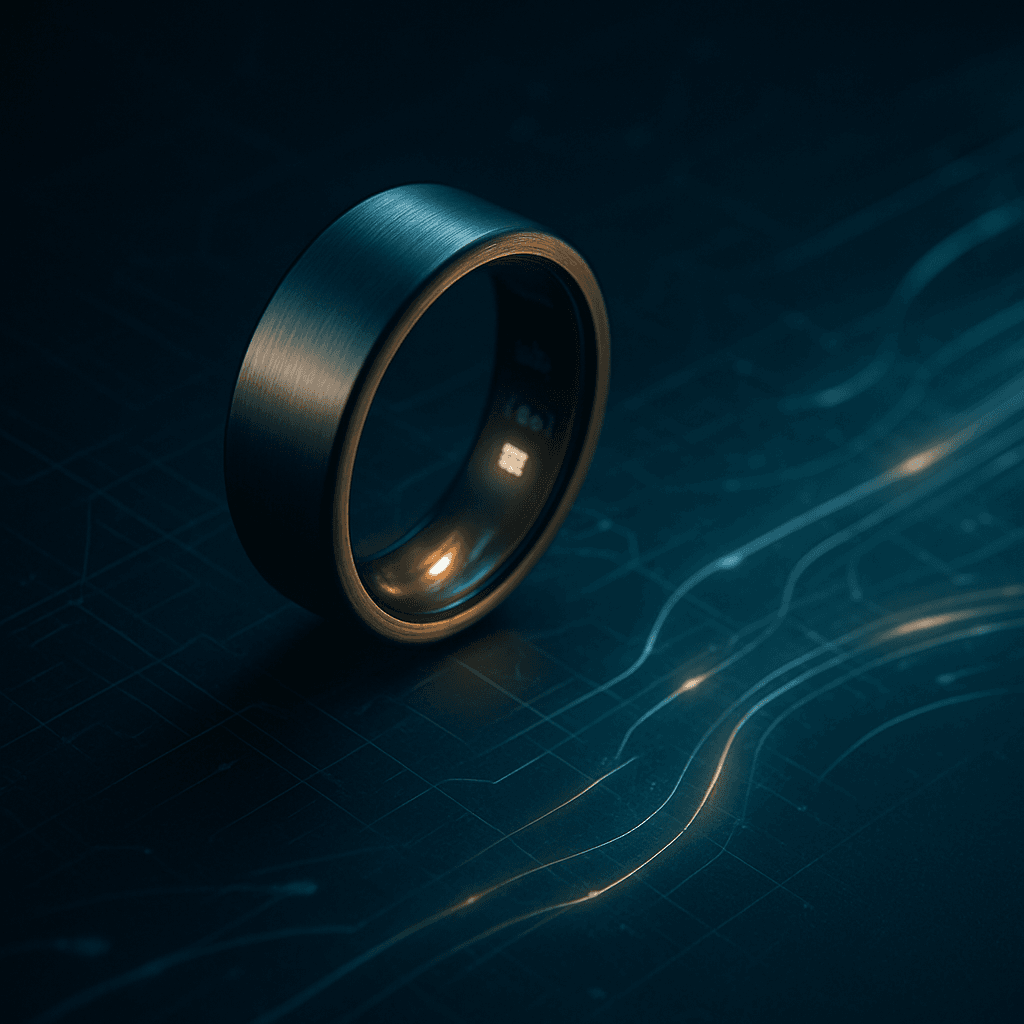
The smart ring just stopped being a fitness tracker. Qualcomm dropped $70 million into Ultrahuman this morning, marking the moment wearables transition from passive biometric collection to active computational platforms. When the world's dominant mobile chipmaker stakes this kind of capital on a form factor, it's not betting on better sleep scores—it's validating a new computing category. The company's $200 million revenue target by January 2027 creates a public accountability timeline for whether consumers actually want computing power on their fingers.
Qualcomm just validated what a small group of founders have been building toward for three years: smart rings as computers, not just sensors. The $70 million round Qualcomm Ventures led into Ultrahuman represents the chipmaker's bet that wearable computing is fragmenting beyond the wrist. Nexus Venture Partners and Blume Ventures joined the round, alongside a strategic partnership with LabCorp that signals health infrastructure integration.
The numbers tell a specific story. Ultrahuman is staking its credibility on hitting a $200 million annual revenue run rate by January 2027—16 months from now, according to TechCrunch reporting. That's not a vague growth target. It's a public commitment that either validates the computational ring thesis or exposes it as premature. For context, that would put Ultrahuman in the same revenue band as early-stage smartwatch makers were in 2015, right before Apple entered and restructured the entire category.
But this isn't 2015, and rings aren't watches. The form factor dictates completely different use cases. Smartwatches won by replacing notifications and fitness bands. Smart rings are positioning as continuous health monitoring that disappears—no screen, no charging anxiety, no social signaling. The computational layer Qualcomm is enabling changes the value proposition from "set it and forget it" to "processing at the edge of your body."
Qualcomm's involvement matters because chipmakers don't typically lead funding rounds in consumer hardware startups. When they do, it signals platform-level thinking. The company's Snapdragon Wear platform already powers most Android smartwatches. Extending that architecture into rings isn't just about miniaturization—it's about validating a parallel computing form factor that coexists with watches rather than replacing them. You wear both, serving different computational needs.
The technical reality centers on power efficiency and sensor density. Rings sit on your finger with constant skin contact and minimal movement compared to wrists. That's better for continuous biometric accuracy but brutal for thermal management and battery life. Qualcomm's silicon needs to process sleep stages, heart rate variability, blood oxygen, and temperature continuously while sipping power measured in milliwatts. The new Ultrahuman device will test whether the chipmaker's latest low-power architecture can sustain computational workloads—like on-device AI health insights—in a package one-tenth the size of a smartwatch.
The market is responding with pattern recognition. Oura pioneered the category and reportedly crossed $500 million in lifetime revenue last year. Samsung launched the Galaxy Ring in July 2026, bringing category credibility but also platform lock-in risks. Ultrahuman's positioning as platform-agnostic with API access for developers creates a different growth path—less consumer brand, more health infrastructure play. The LabCorp partnership hints at this strategy: clinical-grade data collection feeding into diagnostic workflows.
Investors are betting on timing. The smart ring market is projected to hit $2.8 billion by 2030, according to market research, but that assumes rings become a standalone category rather than a premium niche. The 12-18 month window starting now determines market structure. If Ultrahuman hits its January 2027 target while Samsung scales manufacturing and Oura maintains leadership, the category hardens around three platforms. Miss that window, and rings risk becoming the fitness band of the late 2020s—real utility for enthusiasts, invisible to mainstream consumers.
For builders, the calculus is straightforward. Qualcomm's backing means silicon availability and reference designs. That lowers barriers to entry but also compresses differentiation timelines. If you're building in wearable health tech, the question isn't whether to support rings—it's whether to bet on rings as a primary interface or a supplementary data source. Companies building health APIs and data platforms should be integrating ring SDKs now. Those building consumer apps have 6-8 months to establish position before the platform wars begin.
Professionals in health tech face a skill shift. Clinical validation of continuous biometric data from rings requires different expertise than episodic smartwatch data. The FDA's evolving framework for software as a medical device applies differently to always-on monitoring. That creates demand for regulatory specialists who understand both consumer wearables and clinical endpoints. Healthcare systems experimenting with remote patient monitoring should be piloting ring-based data collection now, before vendor consolidation limits options.
The precedent here mirrors hearables more than smartwatches. AirPods didn't replace smartphones—they became a parallel computing surface optimizing for audio I/O. Smart rings are positioning similarly: optimizing for continuous biometric I/O while watches handle notifications and apps. If that thesis holds, we're not watching a zero-sum battle but category expansion. Qualcomm's bet suggests it believes the market can sustain multiple worn computers, each optimized for different data types and interaction models.
The next threshold to watch is product launch timing and specification. Ultrahuman hasn't disclosed when the Qualcomm-powered ring ships or what computational capabilities it enables beyond current models. If it launches before Q2 2027 with on-device AI processing and multi-day battery life, that validates the technical thesis. If it slips to late 2027 or ships with compromised battery performance, the computational ring narrative faces a correction. Samsung's manufacturing scale and Apple's potential entry remain the Category Five events that could reshape everything overnight.
Qualcomm's $70 million validation creates a 12-18 month window for smart rings to prove they're computers, not accessories. Builders should be integrating ring SDKs now before platform consolidation. Investors have until Ultrahuman's January 2027 revenue milestone to assess category viability—after that, market structure hardens. Enterprise health buyers should pilot ring-based monitoring programs before vendor options narrow. Professionals need to develop expertise in continuous biometric validation as clinical applications emerge. The computational ring thesis gets its public test in 16 months. Watch product specs at launch, battery performance in real-world use, and whether Apple or Google make strategic moves before Q2 2027.