
- ■
NY FAIR News Act requires labels on AI-generated news content and mandatory human editorial control before publication
- ■
Data center moratorium bill (S9144) pauses new construction permits for three years amid 10 gigawatt demand surge
- ■
For AI builders: compliance obligations shift from voluntary guidelines to mandatory state-level requirements effective immediately upon passage
- ■
For enterprises: watch regulatory domino effect—other states will likely follow NY's model within 18 months, creating fragmented compliance landscapes
New York just moved AI regulation from the debate stage to the statute books. Two bills now before the state legislature represent the inflection point where regulation stops being aspirational and becomes enforceable—marking the moment state governments begin competing on AI restrictions rather than waiting for federal guidance. The NY FAIR News Act mandates labels on AI-generated news and requires human editorial approval before publication. A companion bill imposes a three-year moratorium on new data center permits. Together, they signal a shift from industry self-governance to state-enforced compliance frameworks that will force national standardization conversations.
The moment landed quietly. New York's state legislature set two bills in motion that together draw the first enforceable line around generative AI in America. The NY FAIR News Act doesn't propose, suggest, or recommend. It requires. Any news content "substantially composed, authored, or created through the use of generative artificial intelligence" must carry a disclaimer. Human editors with "editorial control" must review and approve every AI-generated piece before publication. Organizations must disclose to newsroom employees exactly when and how AI is being deployed. And they must build safeguards preventing confidential source information from being accessed by the AI systems themselves.
This isn't guidance. It's binding law—the moment compliance moves from corporate policy documents to statutory obligation.
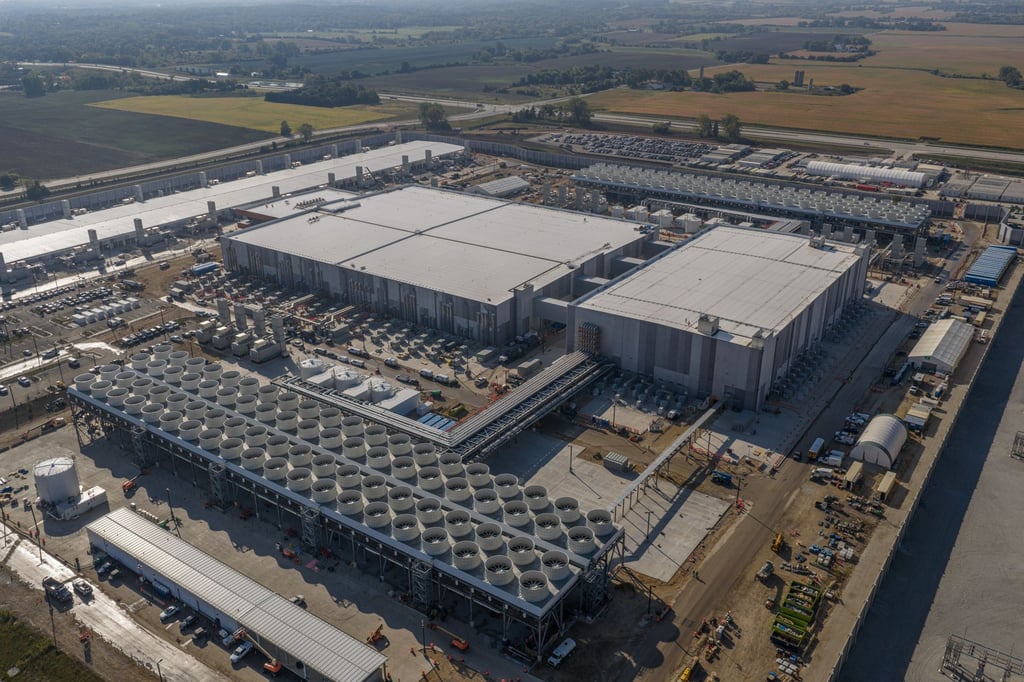
But the NY bills do something else that matters more for timing. The companion data center moratorium—S9144—couples content regulation with infrastructure constraint. For three years, New York stops issuing permits for new data center construction. The state cites rising electricity and gas costs, citing National Grid data showing large load connection requests have tripled in a single year, with at least 10 gigawatts of new demand expected in five years. Con Edison just approved a 9-percent rate increase over three years. The grid is straining. Data centers are the visible cause.
This creates a deliberate bottleneck. AI companies can label their content all day, but if they can't build the infrastructure to run models at scale in the state, they'll route deployment elsewhere. That's not accident—it's regulatory leverage.
Here's what's changing. For years, AI regulation has lived in the federal-maybe-someday space. Congressional hearings, White House executive orders, FTC concerns—all meaningful, all non-binding on operations. States have watched from the sidelines, waiting for national frameworks that never quite materialized. Now New York is saying: we're not waiting. We're writing the rules, and they take effect when this bill passes.
The impact cascades immediately. Every news organization using generative AI for content generation faces compliance costs—legal review of workflows, human editor retraining, source protection audits. These aren't massive expenses, but they're real, measurable, per-article friction. For outlets under financial pressure (and most are), that friction becomes a genuine barrier to AI adoption. That's the regulatory intent—not to ban AI news generation, but to make it expensive enough that editorial judgment reasserts itself.
For Microsoft, OpenAI, Google, and Meta, the content labeling requirement is manageable—they all already have disclosure capabilities in their products. The harder problem is the infrastructure play. Data centers are where AI models physically live. A three-year construction pause doesn't kill existing operations—there are already 130+ data centers in New York—but it signals that expansion will be constrained. In an era where compute demand is growing 40-50% year-over-year, a construction freeze in one of the world's richest tech markets is a clear message: we control your growth here.
The timing matters because it breaks a pattern. For eighteen months, the conversation around AI regulation has been abstract. Should we require impact assessments? Bias audits? Transparency reports? Those are important questions. But none of them have teeth because nobody's actually enforcing them. New York just changed that. A passed bill becomes enforceable law. Violators face penalties. Newsrooms that publish unlabeled AI content without human review become liable. That's not suggestion—that's regulation.
This also matters because it's contagious. States that have been sitting on the fence—California, Massachusetts, Illinois—now face a choice: follow New York's framework or create their own. Either way, the era of "let's wait for federal guidance" is ending. Within two years, you'll likely see variations of the NY FAIR News Act in multiple states, each with slightly different definitions of "AI-generated content," each creating compliance nightmares for companies operating nationally. That fragmentation then creates pressure for federal preemption—the very outcome AI companies were originally lobbying for. Except now the federal floor will probably be tougher than it would have been three years ago, because state laboratories of democracy will have already proven what works.
For enterprise decision-makers, the immediate question is implementation timing. If you're a news organization with significant AI-powered content production, you're now in a race. Do you implement the safeguards voluntarily before the bill passes (better optics, shows good faith)? Or do you wait and hope the bill stalls (riskier, but you avoid costs until you're legally obligated)? The window is probably six to twelve months before a vote. Smart organizations are already running internal audits on AI content flows.
For AI builders, the constraint is different. You're not in a compliance rush—the compliance is already priced into your product roadmaps. But the infrastructure play changes your geography. If New York's construction pause holds for three years, compute capacity shifts to other states. That means co-location costs rise in restricted states, cooling costs rise, connection latency increases. The economic advantage of building on the Eastern Seaboard shrinks. Long-term infrastructure planning just got riskier in New York.
The data is telling here. National Grid reported that large-load connection requests—the kind data centers make—have gone from a manageable trickle to 10 gigawatts of expected demand. For context, that's roughly equivalent to the annual electricity consumption of a city the size of Boston. The existing infrastructure wasn't built for that curve. Three states have proposed data center pauses in the last six months. More are coming.
This is the inflection. It's not the first regulatory proposal around AI. It's the first one designed to actually constrain operations through infrastructure control. It's elegant, actually—regulate content output while restricting the physical capacity to generate it. That's not accident. That's strategy.
New York's move marks the moment state-level AI regulation stops being theoretical and becomes operational. The dual strategy—content labeling requirements plus infrastructure pauses—creates immediate compliance obligations while constraining expansion capacity. For AI companies, this means urgent implementation planning in the next 6-12 months before bills likely pass. For enterprises, the domino effect matters more than the specific NY rules—expect California, Massachusetts, and other major markets to follow within 18 months, fragmenting compliance landscapes. The key threshold to watch: whether federal preemption efforts accelerate in response, and at what level the federal floor eventually settles. Monitor state legislature voting timelines and whether data center construction permits start shifting regionally.




