- ■
Websites and federal agencies report synchronized bot traffic spikes from Lanzhou, China IP blocks, suggesting coordinated rather than opportunistic scanning
- ■
Multi-sector targeting (government + commercial) indicates systematic infrastructure mapping, not isolated attacks
- ■
For federal agencies: immediate IP blocking and threat assessment required; for enterprises: assess bot detection capabilities now
- ■
Watch for cascade evidence: secondary indicators, attack pattern confirmation, and cross-sector coordination timelines
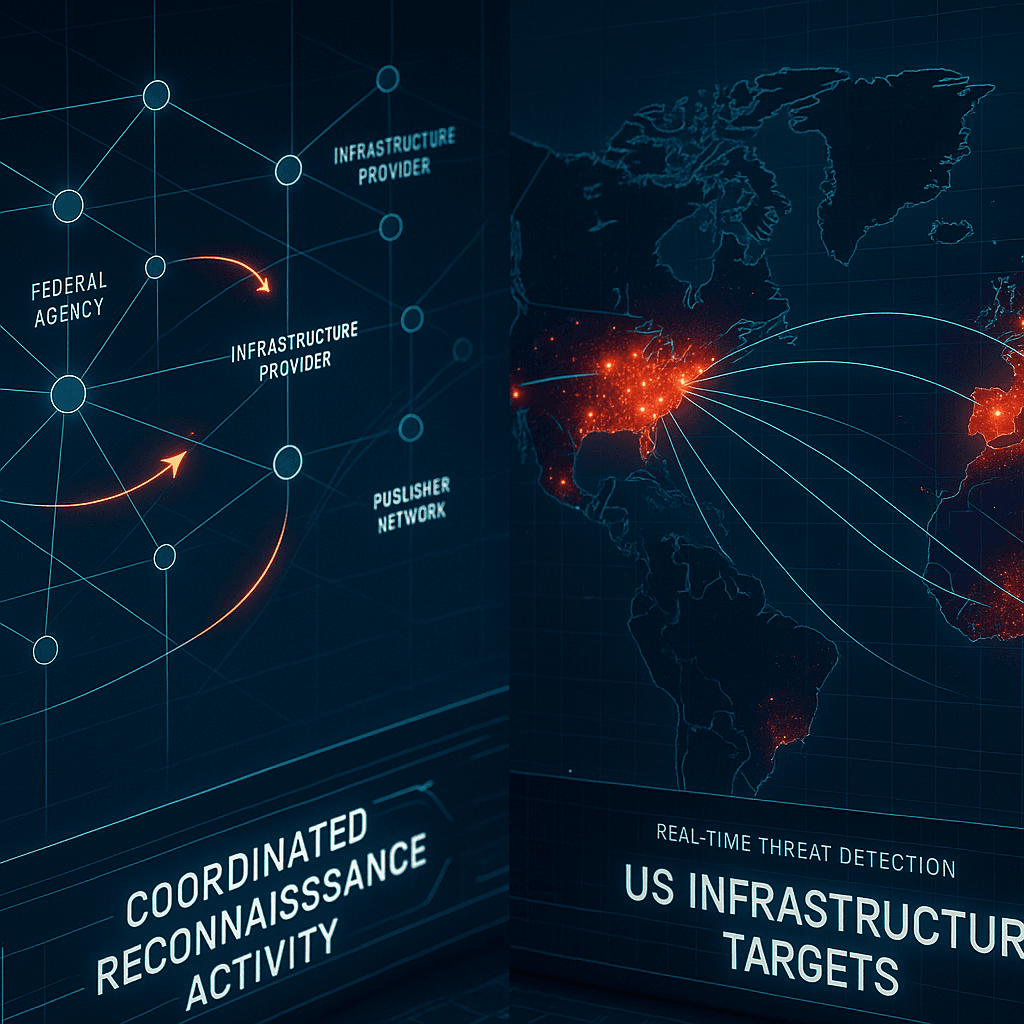
Something shifted this week in the background noise of internet traffic. The discovery of coordinated bot surges originating from a single city in China—Lanzhou—simultaneously targeting US federal agencies, small publishers, and infrastructure providers signals a transition from random, opportunistic scanning to something more deliberate. Security teams across multiple sectors are now treating this as potential reconnaissance for a larger campaign. The timing matters: if validated as nation-state activity, it collapses the window for defensive posture assessment from months to weeks.
The pattern caught security researchers' attention because it violated the normal chaos of internet background radiation. Across unrelated websites—small publishers, federal agencies, infrastructure operators—traffic logs showed synchronized spikes. All traced to Lanzhou, China. All within the same compressed timeframe. This isn't the random noise of automated scanners probing for vulnerable servers. This is mapping.
When bot traffic comes from a single geographic origin and hits multiple unrelated targets simultaneously, it typically means one of two things: either someone is testing detection systems before a larger move, or they're conducting systematic reconnaissance of critical infrastructure. The specific targeting—mixing small publishers with federal agencies—suggests the latter. Small sites often have weaker defenses; federal agencies are the real target. The publishers may be incidental, or they may be part of a supply-chain reconnaissance approach (finding which vendors serve which agencies).
The significance lies in the transition from what security professionals call "spray-and-pray" scanning to coordinated, targeted reconnaissance. Previous bot traffic patterns against US infrastructure have been distributed and reactive—attackers probing for known vulnerabilities, looking for low-hanging fruit. This pattern is different: centralized, synchronized, multi-sector, and deliberately hitting specific classes of targets. That's the inflection point.
Historically, these kinds of coordinated reconnaissance campaigns precede actual infiltration attempts by weeks or months. The 2020 SolarWinds supply-chain attack followed a similar pattern: initial reconnaissance to map the landscape, identify key infrastructure nodes, and test detection capabilities. Then, once the attackers understood the defensive posture, they moved to exploitation. We're potentially in the reconnaissance phase right now.
The Lanzhou origin carries specific weight in threat intelligence circles. The city is home to significant internet infrastructure and has historically been associated with state-sponsored technical operations. That's not proof of nation-state involvement—plenty of non-governmental actors operate from there—but combined with the coordinated nature of the traffic, it moves this from "interesting anomaly" to "concerning pattern" in security assessments.
What makes this timing critical: the window for preventive action is narrow. Once defenders understand the reconnaissance scope, they can implement targeted IP blocking, harden specific infrastructure nodes, and adjust detection thresholds. But that requires confidence about what's actually happening. Right now, there's ambiguity. Is this coordinated? Is it nation-state? Is it preparatory? That uncertainty creates decision paralysis in risk-averse organizations.
For federal agencies, the paralysis ends today. The multi-sector targeting removes plausible deniability—if your agency is hit, you're part of a coordinated campaign, not a random target. That changes the response posture from "monitor and log" to "harden and defend." For enterprises hosting critical infrastructure, the question becomes: how quickly can you audit your bot detection systems? Are you catching traffic from these IP blocks? Do you know what they're scanning for?
The technical reality matters here. Bot traffic analysis can reveal intent. If these bots are looking for specific services, specific software versions, or specific configuration patterns, that tells you what vulnerabilities the attackers likely want to exploit. Some security teams are already running that analysis. The ones who complete it in the next 48 hours will have a strategic advantage.
The broader pattern connects to longer-term infrastructure competition between the US and China. We've seen escalating probe activity over the past 18 months—the frequency and sophistication of scanning campaigns have both increased. This event could represent a step function in that escalation. From opportunistic reconnaissance to systematic mapping. From testing individual companies to coordinating across federal and commercial targets. That's the narrative shift.
What happens next depends on validation. If security researchers confirm the coordinated nature—if they find evidence that these traffic patterns are actually targeting specific systems or seeking specific data—then this becomes a major incident, likely with official government response. If it turns out to be noise, the story ends. The difference between those outcomes gets determined in the next 72 hours by security teams with access to detailed traffic logs.
The bot traffic surge from Lanzhou marks a potential inflection point in how infrastructure attacks are conducted: from opportunistic scanning to systematic reconnaissance. Federal agencies must treat this as active threat preparation and implement immediate hardening. Enterprise security teams need rapid audits of detection capabilities and response plans. For security professionals, this is a skill-in-demand moment—expertise in threat pattern analysis and rapid incident response becomes high-value immediately. Watch for official government confirmation statements, security researcher follow-up analysis, and evidence of secondary indicators within the next week. The next 72 hours determine whether this is strategic reconnaissance or false alarm.