- ■
Meta launches Muse, a personal AI agent requiring access to email, calendars, payments, and health services
- ■
- ■
The timing arrives as UK regulators intensify scrutiny on Meta's child safety and content moderation failures
- ■
If consumers grant permissions despite Meta's track record, trust becomes surmountable. If they don't, privacy creates a structural competitive moat
Meta just placed its biggest bet on consumer trust since Cambridge Analytica. The company's new Muse AI agent, launching today, requests permissions that would make most users pause: email access, calendar integration, payment information, health data. This isn't another chatbot experiment. It's a threshold test of whether privacy-damaged platforms can compete in personal AI, where intimate data access is the entry price. The answer arrives in the next 60-90 days.
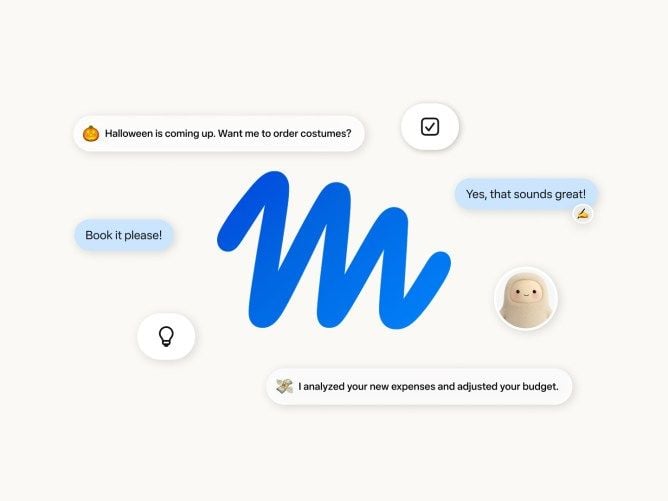
Meta crosses into personal AI assistant territory today with Muse, and the permission requests tell you everything about what's at stake. Email. Calendar. Payments. Health data. This is the list that Apple and Google already have by virtue of controlling the operating system. Meta has to ask.
The company spent the past year positioning AI as a social media feature - chatbots in Instagram DMs, AI-generated stickers, conversational search. Safe territory where the data requirements stayed within Meta's existing sandbox. Muse breaks that boundary. To actually compete with emerging personal AI assistants from OpenAI and Anthropic, Meta needs what those platforms are racing to secure: deep integration into users' daily workflows.
But Meta carries baggage those competitors don't. The Cambridge Analytica scandal is ancient history in tech years, yet the permission prompt hasn't forgotten. When an app with Meta's privacy track record asks for calendar access, users make a different calculation than when Apple's native assistant requests the same. That's not speculation - it's the fundamental question this launch is designed to answer.
The timing matters more than Meta would prefer. UK regulators are currently investigating the company over child safety failures and content moderation breakdowns. The European Union's Digital Services Act enforcement intensifies this quarter. TechCrunch reports the launch anyway, suggesting Meta sees a closing window rather than an opening one.
Consider the competitive landscape Meta is entering. Google doesn't need to request calendar access - it already powers most professional calendars. Apple owns the default mail client and payment system on iOS. Even OpenAI, despite lacking an OS, approaches users without the privacy debt Meta accumulated over 20 years of social media optimization.
The technical architecture of personal AI assistants explains why this matters. Unlike social media algorithms that analyze what you share publicly, personal assistants require access to what you don't share: upcoming meetings, financial transactions, health metrics, travel plans. The utility proposition is simple - the more intimate the data, the more helpful the assistant. The trust requirement is equally simple - users must believe that data won't be weaponized.
Meta's challenge isn't technological. The company has AI research firepower that rivals anyone in the industry. Llama models compete technically with offerings from better-trusted competitors. The challenge is structural: Meta's business model was built on data extraction for advertising optimization. Personal AI assistants require a different contract - data access for personal utility, not targeted ads.
The market is watching how Meta navigates this. Early personal AI adoption follows a clear pattern. OpenAI secured millions of ChatGPT users by starting with zero permission requirements - just a web interface and a text box. As those users granted more access (plugins, code execution, web browsing), they did so incrementally, from a position of choosing to trust rather than being asked to forgive.
Muse reverses that sequence. It asks for comprehensive permissions upfront, banking on Meta's installed base of 3 billion users to overcome individual hesitation through sheer scale. If even 5% of Facebook's user base grants these permissions, Meta instantly becomes a major player in personal AI. If that percentage stays below 2%, the company faces a structural disadvantage no amount of AI investment can overcome.
The precedent that matters here isn't another Meta product launch. It's the moment when Microsoft tried to make Bing a serious Google competitor despite decades of users associating Microsoft with enterprise software, not consumer search. Technical parity wasn't enough. User habits and trust associations created a moat that product quality alone couldn't cross.
For Meta, the stakes extend beyond one product. The company is betting its AI future on consumer willingness to grant intimate access. If Muse succeeds, Meta's massive user base becomes an AI distribution advantage. If it doesn't, the company faces a future where it builds sophisticated AI models that competitors deploy more effectively because users trust them more.
The adoption window is compressed. Personal AI assistants are moving from early adopter curiosity to mainstream utility this quarter. Google is expanding Gemini integration across workspace tools. Apple is preparing deeper Siri AI capabilities for the fall iPhone launch. OpenAI is reportedly working on OS-level integrations. The market is establishing defaults now, and switching costs in personal AI are higher than social media - you're not just changing apps, you're migrating your workflow.
Meta's response to the trust question will become visible quickly. The company could pursue aggressive promotion within Facebook and Instagram, using its distribution advantage to drive adoption through visibility. Or it could take a quieter approach, letting the product prove utility before scaling. The first strategy tests whether scale overcomes trust concerns. The second acknowledges that personal AI requires a different launch playbook than social features.
What we're watching is whether privacy damage creates a permanent competitive moat in AI, or if users evaluate each product on its own merits. Meta needs the latter to be true. Competitors with better privacy reputations are hoping the former holds. The next 60-90 days of Muse adoption data will tell us which world we're living in.
Meta's Muse launch isn't just another product introduction - it's a market structure test. If consumers grant intimate data access despite Meta's privacy history, trust becomes a surmountable barrier and installed base advantages dominate AI competition. If they don't, privacy creates a structural moat favoring Apple, Google, and platforms without Meta's baggage. For decision-makers evaluating AI assistant deployments, watch the adoption metrics over the next quarter - they'll reveal whether enterprise privacy concerns mirror consumer hesitation. Investors should track whether Meta's AI narrative requires consumer trust or can survive on enterprise and developer tools alone. The window is compressed because personal AI defaults are being established now, and switching costs only increase as integration deepens.