- ■
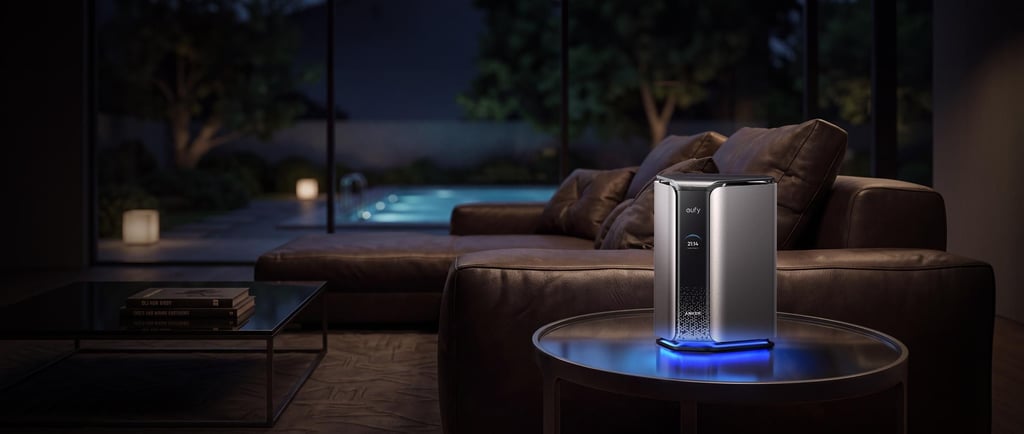
Anker's Eufy MindBase brings local LLM processing to consumer smart home security, processing camera footage entirely on-device
- ■
Positioned as whole-home AI hub with Matter support, targeting privacy-conscious consumers unwilling to send footage to cloud servers
- ■
Tests whether edge AI adoption follows enterprise infrastructure patterns or hits consumer indifference to data privacy trade-offs
- ■
Watch for integration announcements beyond security cameras and competitive responses from Ring, Nest within 6-8 months
Anker just launched the MindBase, a local AI hub that processes security camera footage using an on-device LLM without cloud connectivity. Unveiled at IFA Berlin, the device represents consumer hardware catching up to edge AI infrastructure trends—addressing privacy concerns while avoiding subscription costs. But this launch tests an unproven hypothesis: that consumers value data sovereignty enough to abandon cloud convenience. The answer determines whether edge AI becomes standard in smart homes or remains a niche feature.
Anker crossed a threshold this morning at IFA Berlin that's been building since enterprise AI infrastructure shifted toward distributed inference. The Eufy MindBase runs a proprietary LLM entirely on-device, processing security camera footage without touching cloud servers. That's not just a privacy pitch—it's a bet that consumer hardware is ready for the same edge AI transition happening in data centers.
The timing matters. While Nvidia and hyperscalers race to build distributed AI infrastructure for enterprises, Anker is testing whether consumers actually care about the same local processing benefits. The MindBase analyzes video feeds, identifies events, and responds to natural language queries about your home security—all without monthly subscriptions or data leaving your network. It's the consumer hardware equivalent of keeping training data on-premises.
But here's the inflection point this launch exposes: consumer AI adoption doesn't follow enterprise patterns. Businesses moved to edge computing for latency, cost, and compliance. Consumers have shown they'll trade privacy for convenience almost every time. Ring and Nest built billion-dollar businesses on cloud-dependent cameras with subscription fees. The question isn't whether local AI processing is technically superior—it's whether anyone beyond privacy advocates will pay for it.
Anker is positioning MindBase as more than security hardware. The device supports Matter protocol, suggesting ambitions as a whole-home AI hub. Security cameras are the entry point, but the architecture could extend to thermostats, lights, appliances—anything generating data you might not want uploaded. That's the same platform strategy Apple uses with HomeKit, prioritizing privacy as product differentiation.
The numbers from enterprise edge AI provide context but not prediction. Data center operators are deploying distributed inference because milliseconds matter for autonomous vehicles and industrial systems. Smart home response times are measured in seconds, not microseconds. The performance advantage of local processing doesn't translate to consumer use cases the way it does for self-driving cars.
What Anker does have is the subscription fatigue angle. Consumers are hitting resistance to monthly fees stacking up across services. A $299 hub that eliminates recurring costs while matching cloud AI capabilities could find traction not through privacy advocacy but through basic economics. That's a different value proposition than enterprise edge computing, but potentially more relevant to actual buying behavior.
The technical execution here deserves scrutiny. Running LLMs on consumer-grade hardware means model size constraints and capability trade-offs compared to cloud inference. Anker hasn't disclosed model parameters, training approach, or benchmark performance against cloud-based alternatives from Amazon Alexa or Google Home. Without that data, this launch reads as feature announcement rather than validated product-market fit.
For builders, MindBase represents validation that edge AI silicon has reached consumer price points. The same chip architectures powering enterprise inference are now cheap enough for sub-$300 retail products. But deploying local LLMs requires different optimization than cloud models—you're trading compute abundance for power and thermal constraints. That's an engineering challenge, not just a deployment choice.
The competitive response will clarify market reality faster than adoption metrics. If Amazon or Google announce local processing options within two quarters, it signals they see genuine demand. If they ignore this launch, it suggests their customer data shows privacy concerns don't translate to purchase decisions. Ring already offers local storage options that barely anyone uses—a pattern that doesn't favor Anker's thesis.
Anker's previous privacy stumbles with Eufy cameras—where supposedly local footage appeared in cloud streams—create credibility issues this launch must overcome. Promising on-device AI processing after breaking similar promises about cloud independence requires more than marketing claims. Independent security audits and open verification would build trust, but aren't mentioned in launch materials.
The Matter integration is the smart long-term play. As the smart home industry consolidates around interoperability standards, being an early AI hub with broad device support positions MindBase as infrastructure rather than accessory. But Matter adoption itself is still ramping—banking on a standard that hasn't achieved mainstream penetration adds execution risk to market risk.
What we're watching is whether consumer hardware follows the same edge AI trajectory as enterprise infrastructure, or whether that pattern breaks at the consumer tier. Enterprise moved to distributed inference because centralized cloud processing couldn't meet latency, cost, and sovereignty requirements. Consumers have different constraints and haven't demonstrated they value those same attributes enough to change buying behavior.
Anker is testing whether consumer hardware can follow enterprise edge AI patterns, but the evidence doesn't favor that hypothesis yet. For builders, this validates that edge AI silicon has reached consumer price points—the technical infrastructure is ready. For decision-makers evaluating smart home platforms, wait for competitive responses from Amazon and Google in Q4 2026 before committing to local-first architectures. The real inflection comes not when the technology ships, but when consumer behavior proves privacy concerns override cloud convenience. That shift hasn't happened yet, and one product launch at a trade show doesn't create it. Watch for integration announcements beyond security and subscription cancellation rates among cloud camera users—those metrics will show if this transition has momentum or remains wishful thinking.