- ■
OpenAI killed Sora and ditched a $1B Disney licensing deal because video generation costs too much versus agent infrastructure
- ■
Anthropic banned OpenClaw from standard Claude subscriptions, forcing users to pay-as-you-go plans that cost substantially more
- ■
AI agents burn tokens faster than anticipated—valuable to customers but devastating to unit economics as both companies race toward massive IPOs
- ■
Leaked projections show hundreds of billions in revenue targets by 2030, but the question is whether AI labs can become profitable businesses or spectacular failures
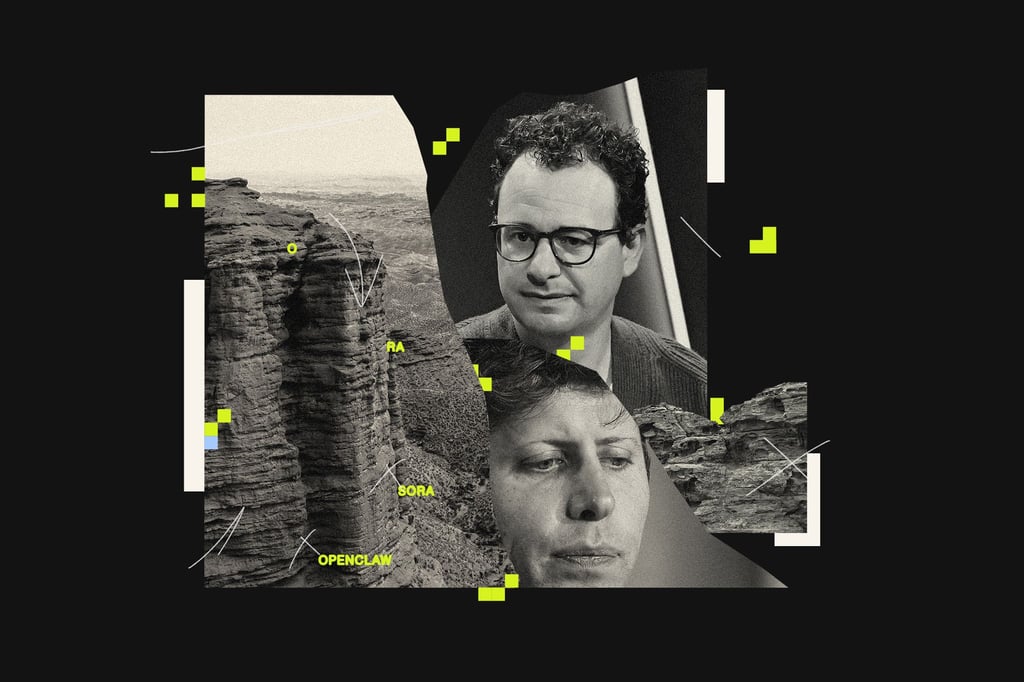
The AI industry just crossed from growth-at-all-costs to existential monetization pressure. OpenAI killed Sora and walked away from a $1 billion Disney deal. Anthropic banned OpenClaw from standard subscriptions, forcing users onto pay-as-you-go plans. These aren't isolated decisions—they're symptoms of compute economics forcing AI labs to choose between shipping everything and shipping what actually pays as IPO deadlines approach.
OpenAI just made the kind of decision that defines inflection points: killing a flagship product to save compute resources. Last month, the company abruptly shut down Sora, its video-generation app, walking away from a $1 billion licensing deal with Disney in the process. The reason cuts to the core of AI's monetization crisis—Sora costs too much to run, and OpenAI needs every GPU for Codex, its agent infrastructure that actually generates revenue.
Days later, Anthropic made its own hard choice. The company essentially banned OpenClaw, the open-source agent framework, from standard Claude subscriptions. Users burning through compute with agents now have to switch to pay-as-you-go plans that cost substantially more. Not a bug fix or a policy tweak—a fundamental shift in how the company thinks about resource allocation versus revenue.
These are the opening moves of what The Verge's Hayden Field calls the "AI monetization cliff." Both companies are barreling toward what could be two of the biggest IPOs in history, and the math has changed. Agents like Claude Code, Cowork, and OpenAI's Codex are valuable to customers right now, but they use far more compute than chatbots. The way people are using agents is burning tokens at a rate these companies didn't anticipate, forcing choices between what ships and what pays.
The numbers tell the inflection story. According to projections leaked to the Wall Street Journal this week, both companies are forecasting mind-boggling growth—hundreds of billions in revenue and profitability by the end of the decade. OpenAI recently raised another $122 billion at an $850 billion valuation, capital that comes with expectations of returns, not just more R&D runway.
But the infrastructure costs are spiraling faster than revenue. The Wall Street Journal reported that AI labs are built on hundreds of billions in capital investment, linked to even greater forward-looking spend in data centers, chips, and compute infrastructure. At some point, the profits have to materialize or the bubble pops.
That point is now. The shift from venture-subsidized experimentation to capital-constrained prioritization is forcing AI labs to operate like actual businesses. Product roadmaps are being rewritten based on compute costs, not capability demonstrations. Customer expectations are being reset—what was included in a $20 subscription last quarter now requires usage-based pricing. The strategic question has moved from "what can we build?" to "what can we afford to run?"
The organizational stress is showing. OpenAI's Fidji Simo is taking leave amid executive shake-ups. The Verge reported that the vibes are off at OpenAI as the company navigates this transition from research lab to public company. Meanwhile, OpenAI acquired TBPN, signaling M&A as another path to revenue diversification before going public.
The agent economics are the catalyst. Agents are the first AI products that customers will actually pay enterprise prices for because they deliver measurable productivity gains. But those same agents consume 10x to 100x more compute than simple chat interactions. The business model that worked for ChatGPT subscriptions breaks completely when users run autonomous agents for hours doing complex tasks.
Anthropic's OpenClaw decision crystallizes the dilemma. The framework became popular precisely because it let Claude users automate workflows—browsing, coding, data analysis—within their existing subscriptions. But that popularity created a resource allocation problem. Standard subscribers were consuming compute at rates that made the economics unsustainable. Forcing them to pay-as-you-go isn't a price increase, it's a fundamental repricing of what AI access means.
This mirrors patterns from previous technology transitions. Remember when cloud providers moved from unlimited plans to usage-based pricing as workloads scaled? Or when social platforms shifted from "growth at all costs" to "profitable growth" before IPOs? The AI labs are hitting that same inflection, just faster and with more capital at stake.
Public market pressure accelerates everything. An NBC News poll showed voters like AI less than ICE, signaling that public sentiment isn't providing unlimited patience for unprofitable AI companies to figure out monetization. Investors who backed OpenAI at an $850 billion valuation aren't betting on research projects—they're betting on a business that can generate returns on that capital within a reasonable timeframe.
The compromises are already visible. Sora's death means OpenAI won't compete in AI video generation, ceding that market to competitors while focusing resources on agents and enterprise infrastructure. Anthropic's pricing changes mean individual developers and small teams get priced out of cutting-edge agent capabilities, potentially slowing ecosystem development. These are the trade-offs of transitioning from "ship everything" to "cut what doesn't pay."
What's coming next? More product consolidation as AI labs focus on revenue-generating capabilities. Expect further pricing adjustments as companies figure out sustainable unit economics for different AI workloads. Watch for acquisitions as labs buy revenue and customer bases rather than building organically. And prepare for some spectacular failures—not every AI lab will make this transition successfully.
The AI industry just transitioned from research-driven growth to economics-driven prioritization, and the timing matters differently for each audience. Builders have 6-8 months to establish agent infrastructure before pricing models stabilize and access tiers harden. Investors should watch unit economics on agent workloads—those numbers will determine which labs become sustainable businesses versus spectacular write-offs. Enterprise decision-makers face a window where AI capabilities are proven but pricing remains in flux, creating negotiation leverage that won't last. For professionals, the shift from unlimited experimentation to usage-based access means the free exploration phase is ending. The next milestone to watch: how these companies report revenue and profitability metrics in their IPO filings, which will reveal whether the projected hundreds of billions in growth is achievable or aspirational.